Conscience
If you've never thought much about conscience, read this short little book - biblical and we'll written
Sam
A Clear Conscience, A Practical Guide
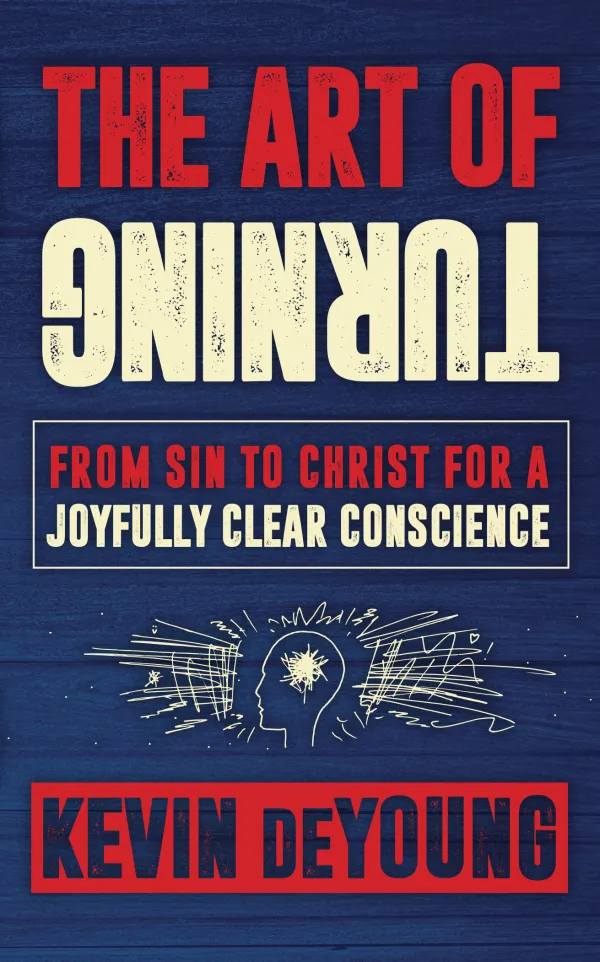
In The Art of Turning, Kevin DeYoung offers a thoughtful and practical exploration of the conscience and its essential role in Christian life. He emphasises the importance of maintaining a clear conscience before God, turning from sin, and turning to Christ. DeYoung stresses that a clear conscience is vital for peace with God, offering practical insights for how to live with integrity, confession, and forgiveness in our daily lives. The book’s practical approach is one of its strongest points. DeYoung doesn’t just engage in theoretical theology; he brings the conversation down to real-life situations, encouraging readers to reflect on their daily choices and how those choices impact their conscience. I appreciated how he framed the conscience as both a guide and a warning—something that should lead us to Christ, not to self-condemnation. That said, I disagreed with DeYoung’s interpretation of the “weak conscience” in 1 Corinthians 8, particularly regarding food sacrificed to idols. While I understand the broader point about not causing others to stumble, I felt his view was a bit too subjective in terms of how we should interpret right and wrong. Overall, this book is a solid resource for anyone looking to deepen their understanding of the conscience and how to live with peace before God. While I wish there had been more depth in certain areas, particularly regarding tricky passages, The Art of Turning is still a valuable read for personal reflection and spiritual growth.
Ema
A Clear Conscience, A Practical Guide
In The Art of Turning, Kevin DeYoung offers a thoughtful and practical exploration of the conscience and its essential role in Christian life. He emphasises the importance of maintaining a clear conscience before God, turning from sin, and turning to Christ. DeYoung stresses that a clear conscience is vital for peace with God, offering practical insights for how to live with integrity, confession, and forgiveness in our daily lives.
The book’s practical approach is one of its strongest points. DeYoung doesn’t just engage in theoretical theology; he brings the conversation down to real-life situations, encouraging readers to reflect on their daily choices and how those choices impact their conscience. I appreciated how he framed the conscience as both a guide and a warning—something that should lead us to Christ, not to self-condemnation.
That said, I disagreed with DeYoung’s interpretation of the “weak conscience” in 1 Corinthians 8, particularly regarding food sacrificed to idols. While I understand the broader point about not causing others to stumble, I felt his view was a bit too subjective in terms of how we should interpret right and wrong.
Overall, this book is a solid resource for anyone looking to deepen their understanding of the conscience and how to live with peace before God. While I wish there had been more depth in certain areas, particularly regarding tricky passages, The Art of Turning is still a valuable read for personal reflection and spiritual growth.
Bianca
A Book About the Conscience
An EXCELLENT short book. Wow! ‘The Art of Turning’ is about our conscience - what an evil, seared, defiled or weak conscience looks like - and how Christians can live in freedom with a good conscience: a life of confessing sin when The Holy Spirit convicts us and enjoying the forgiveness found in Jesus.
‘God’s mercy for sinners is also an act of justice, because Christ has fully paid for all our debts. God doesn’t say, “Your sins are no big deal. Never mind.” He says, “Your sins deserve an infinite punishment, but that punishment has been met by my Son.”’
Lydia
The Art of Turning
This is an excellent little book with life-changing potential. Crystal clear, beautifully written, and utterly faithful to the Bible, Kevin DeYoung packs each of its 40 pages full of the gospel as well as his trademark pastoral wisdom and illuminating exposition. For those new to Christianity, it offers a compelling path away from the despondency and hopelessness of a guilty conscience towards the joy and liberation of a clean conscience. For those whose Christian walk has involved daily reminders of sin and the pressing burden of a tender conscience, it provides a glorious reminder of the freedom and forgiveness we have if we turn to Christ. And for those Christians whose conscience is all too used to being shoved aside, being ignored, or otherwise "misfiring", it plots a route to repentance and the joyful clarity of a conscience that finds full forgiveness at the foot of the cross.
Jonathan Storey
Grace Church Cheltenham
Jonathan Storey
Powerful, both challenging and liberating, and crystal clear
This is an excellent little book with life-changing potential. Crystal clear, beautifully written, and utterly faithful to the Bible, Kevin DeYoung packs each of its 40 pages full of the gospel as well as his trademark pastoral wisdom and illuminating exposition. For those new to Christianity, it offers a compelling path away from the despondency and hopelessness of a guilty conscience towards the joy and liberation of a clean conscience. For those whose Christian walk has involved daily reminders of sin and the pressing burden of a tender conscience, it provides a glorious reminder of the freedom and forgiveness we have if we turn to Christ. And for those Christians whose conscience is all too used to being shoved aside, being ignored, or otherwise "misfiring", it plots a route to repentance and the joyful clarity of a conscience that finds full forgiveness at the foot of the cross.
Jonathan Storey
Grace Church Cheltenham
Jonathan Storey
The Art of Turning
"10 of those" the excellent Christian publisher do attractive and short books aimed at the general Christian reader. The latter feature is particularly important as in general people's attention span and patience to wade through huge tomes is shrinking fast, especially young people. They consume information but in bite sized chunks. Well, this is definitely bite sized with 40 small pages.
Kevin DeYoung who is an American pastor (and the illustrations and examples are therefore American) writes helpfully and practically about the conscience. I am not aware of any other (recent) books on this though the Puritans in particular wrote a lot of good stuff about it. JI Packer for example writes “ The concern which was really supreme in the minds and hearts of the people called Puritans was a concern about God—a concern to know Him truly, and serve Him rightly, and so to glorify Him and to enjoy Him. But, just because this was so, they were in fact very deeply concerned about conscience, for they held that conscience was the mental organ in men through which God brought His Word to bear on them. Nothing, therefore, in their estimation, was more important for any man than that his conscience should be enlightened, instructed, purged, and kept clean. To them, there could be no real spiritual understanding, or any genuine godliness, except as men exposed and enslaved their consciences to God’s Word."
So what is the conscience? DeYoung defines it as "the moral faculty within human beings that assesses what is good and what is bad". He looks at some practical examples which are well developed - Luther and Paul. Although Luther now almost every historian agrees did not actually say “ Here I stand” - but it was an ideal very much in the spirit of his "stand" at the Diet of Worms. As always with DeYoung who is a prolific and enjoyable writer he writes fluently, biblically and practically. He looks at misfiring consciences for example and makes some good points. What I found particularly helpful is his emphasis on having a balanced approach. It is possible to be morbidly continually examining ourselves and a few of the Puritans were perhaps by temperament inclined this way. But today we have likely gone much more to the opposite extreme of not using our God given moral faculty. De Young concludes by saying that the conscience is or should be “the Christians best friend'.
Additionally, if you liked this I hope it whets your appetite as there are many Puritan books on the conscience, the classic being Richard Sibbes “The Bruised Reed”. But even better I think is Bunyan's wonderful and shockingly overlooked classic allegory “The Holy War” which is in my view as good as “Pilgrims Progress”. “Mr Recorder” is the conscience of Mansoul (the City which is humanity) and his job is to support and learn from “Lord Secretary” — the Holy Spirit. When Mr Recorder, the conscience, is alive and active it is therefore just as DeYoung says our greatest friend for it brings us the Spirit into everyday life. But when he’s asleep watch out boys and girls, for here comes the devil creeping in who infiltrates and then captures the city and the first thing he does is get rid of Mr Recorder. For if we have no divine sense of good and evil we are truly in trouble. Read them both yourself, both classic books and also available through the estimable 10 of those.
Jeremy Marshall
The Christians best friend
"10 of those" the excellent Christian publisher do attractive and short books aimed at the general Christian reader. The latter feature is particularly important as in general people's attention span and patience to wade through huge tomes is shrinking fast, especially young people. They consume information but in bite sized chunks. Well, this is definitely bite sized with 40 small pages.
Kevin DeYoung who is an American pastor (and the illustrations and examples are therefore American) writes helpfully and practically about the conscience. I am not aware of any other (recent) books on this though the Puritans in particular wrote a lot of good stuff about it. JI Packer for example writes “ The concern which was really supreme in the minds and hearts of the people called Puritans was a concern about God—a concern to know Him truly, and serve Him rightly, and so to glorify Him and to enjoy Him. But, just because this was so, they were in fact very deeply concerned about conscience, for they held that conscience was the mental organ in men through which God brought His Word to bear on them. Nothing, therefore, in their estimation, was more important for any man than that his conscience should be enlightened, instructed, purged, and kept clean. To them, there could be no real spiritual understanding, or any genuine godliness, except as men exposed and enslaved their consciences to God’s Word."
So what is the conscience? DeYoung defines it as "the moral faculty within human beings that assesses what is good and what is bad". He looks at some practical examples which are well developed - Luther and Paul. Although Luther now almost every historian agrees did not actually say “ Here I stand” - but it was an ideal very much in the spirit of his "stand" at the Diet of Worms. As always with DeYoung who is a prolific and enjoyable writer he writes fluently, biblically and practically. He looks at misfiring consciences for example and makes some good points. What I found particularly helpful is his emphasis on having a balanced approach. It is possible to be morbidly continually examining ourselves and a few of the Puritans were perhaps by temperament inclined this way. But today we have likely gone much more to the opposite extreme of not using our God given moral faculty. De Young concludes by saying that the conscience is or should be “the Christians best friend'.
Additionally, if you liked this I hope it whets your appetite as there are many Puritan books on the conscience, the classic being Richard Sibbes “The Bruised Reed”. But even better I think is Bunyan's wonderful and shockingly overlooked classic allegory “The Holy War” which is in my view as good as “Pilgrims Progress”. “Mr Recorder” is the conscience of Mansoul (the City which is humanity) and his job is to support and learn from “Lord Secretary” — the Holy Spirit. When Mr Recorder, the conscience, is alive and active it is therefore just as DeYoung says our greatest friend for it brings us the Spirit into everyday life. But when he’s asleep watch out boys and girls, for here comes the devil creeping in who infiltrates and then captures the city and the first thing he does is get rid of Mr Recorder. For if we have no divine sense of good and evil we are truly in trouble. Read them both yourself, both classic books and also available through the estimable 10 of those.
Jeremy Marshall