1. No results matched your search.

    Loading...

We use cookies to improve your experience on our website. Please let us know your preferences.

Want to know more? Check out our cookie policy. Click here to manage cookies.

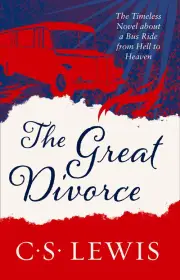
The Great Divorce
The Great Divorce

1.0

The Great Divorce

C S Lewis

1.0

The Great Divorce

C S Lewis

Quantity

Quantity

Please wait while we complete your order.

Buy now with

Google Pay

C.S. Lewis’s dazzling allegory about heaven and hell and the chasm fixed between them, is one of his most brilliantly imaginative tales, as he takes issue with the ideas in William Blakes’s The Marriage of Heaven and Hell.

In a dream, the narrator finds himself in the grey limbo of Hell, where the disgruntled and ghostly inhabitants take a bus–ride to the plains of Heaven, where they meet angels and the souls of those already in Heaven. This striking fable portrays Hell as small and shrunken, less substantial than Heaven, which is bright and solid and the ultimate Reality. The occupants of Hell can never become part of Heaven, for their spiritual blindness prevents them from entering into its glorious reality. They prefer their own shrunken version of reality, to the joy which could be theirs.

This powerful, exquisitely written fantasy is one of C.S. Lewis’s most enduring works of fiction. As ever, Lewis communicates deep spiritual truths through the sheer power of the fantastic.

C S Lewis

C S Lewis

Clive Staples Lewis was a British novelist, poet, academic, medievalist, literary critic, essayist, lay theologian, broadcaster, lecturer, and Christian apologist.

See other titles by this author

Overall rating

1.0 based on 1 review

An Allegory That Didn’t Connect

In The Great Divorce, C. S. Lewis presents a short imaginative tale about the contrast between heaven and hell, told through a series of encounters and conversations. I’m not naturally drawn to fantasy, though I can appreciate it when it’s done well. This one, however, didn’t work for me, which is reflected in the low rating. It feels more like a speculative exercise than a fully formed narrative, and it never quite develops into something compelling or satisfying as a story. There’s also a theological disconnect for me, and I couldn’t align with his framework. Whatever the intention was—perhaps to give insight into life after death or moral realities beyond this life—it felt more like a string of ideas and conversations than anything concrete or deeply illuminating. Instead of clarity, it often felt like wandering through extended dialogues that didn’t really build toward much. Overall, it just wasn’t a book that connected with me, either as story or as reflection.

Bianca

Also in this series

Leave a Review

The Great Divorce

Added to basket!

Especially for you...